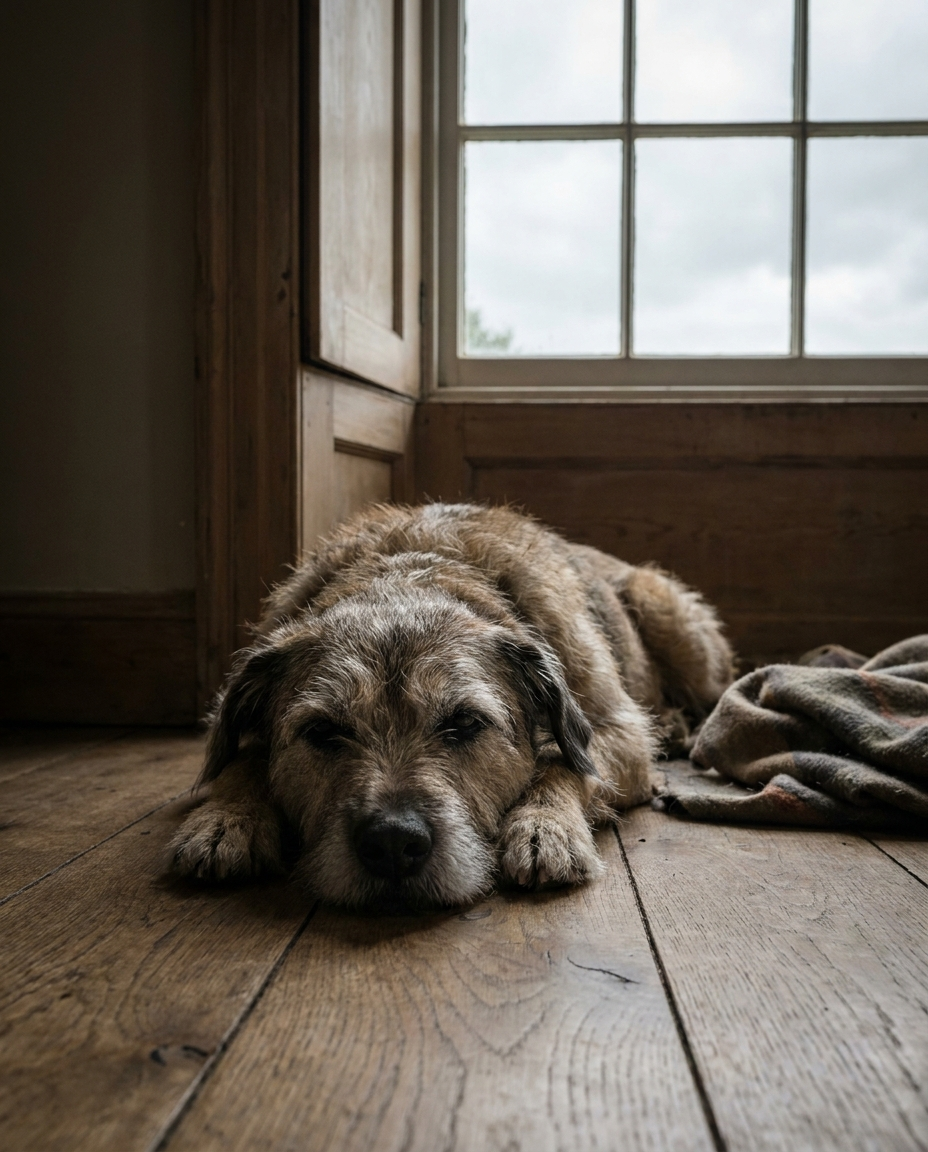
You've seen it. The hesitation at the bottom of the stairs. The limp that only shows up after a nap.
The walk that used to be 45 minutes is now 20 — and even that costs them the rest of the afternoon lying down.
Nobody tells you how quiet this part is. There's no one bad day. Just small things disappearing, one at a time — the jump onto the couch, the sprint to greet you at the door — until one day you realize how much has quietly gone.
What is red light therapy, really?
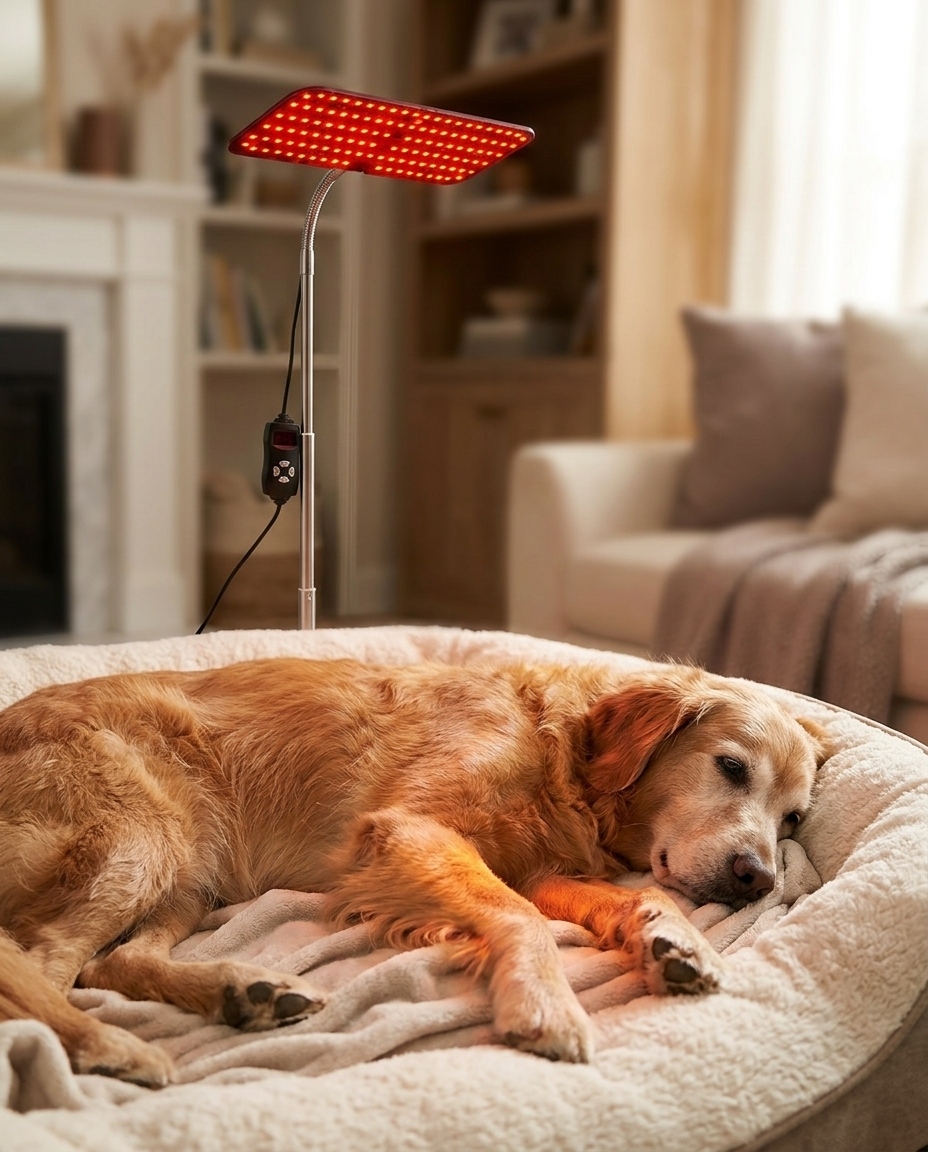
It's simple. A small lamp shines red and deep-red light onto your dog's sore spots — hips, shoulders, front legs, wherever it hurts. There's no medication, no needles, and most dogs sleep right through it.
Scientists believe the light gives cells in the sore area a small energy boost — a bit like giving a tired phone battery a quick top-up, so the body can do its own repair work a little better. It's called photobiomodulation in research papers, but "red light therapy" is the same thing.
Does it actually work? Here's the real proof.
We didn't want to just tell you it works. So here's an actual scientific study — the kind where nobody could cheat the results even by accident.
In 2018, vets tested this on 20 real dogs with sore, arthritic elbows. Half the dogs got real red light therapy. The other half got a lamp that looked identical but was switched off. Nobody — not the owners, not the vets scoring the dogs — knew which dog got which, until the study was over.
Dogs also moved easier and showed less pain, confirmed by vets who didn't know which dogs had gotten the real treatment. Source: Looney et al., "A randomized blind placebo-controlled trial investigating the effects of photobiomodulation therapy on canine elbow osteoarthritis," Canadian Veterinary Journal, 2018.
A separate study looked at something different: how fast wounds heal. 21 dogs with slow-healing wounds were split into three groups and treated every other day for two weeks.
Source: Hoisang et al., "Assessment of wound area reduction on chronic wounds in dogs with photobiomodulation therapy," Veterinary World, 2021.
The honest part
These studies are small — 20 dogs, 21 dogs. That's real proof, not a marketing number we made up, but it's also not a giant hospital trial. And the labs used stronger equipment than a home lamp, so results at home may be gentler than in the lab.
This isn't a replacement for your vet. Every dog in these studies got light therapy on top of normal treatment, not instead of it — and that's exactly how we'd want you to use it too.
What owners are actually saying
My senior girl was getting really stiff in one leg and limping a bit, especially after she'd been sleeping a while. Daily red and NIR sessions later, the limping and stiffness are gone — she's back to jumping around with her brother.
Verified customerI have three senior dogs, one very arthritic with a replaced hip and severely inflamed front paws. She gets red and NIR light every day, ten to twenty minutes, alongside her regular vet care — it's become part of the routine.
Verified customerEvery month you wait is a month they spend stiff.
Dogs don't get more mobile years back once they're gone. The earlier a daily routine starts, the more of those good years you get to actually use — the walks, the stairs, the greeting at the door.
Start today — shop the lamp